
Chimney flashing
Weatherproofing around chimney stacks, including junctions where the chimney meets the roof covering.
Well-fitted roof flashings help protect the vulnerable joints where roofs meet chimneys, walls and other features. Discuss repairs, replacement and weatherproofing with our roofing team.
Flashing creates weather-resistant junctions around some of the most exposed parts of a roof.
Ageing, loose or poorly fitted flashing can allow rainwater to reach areas that should remain protected. The appropriate solution depends on the condition of the materials, the roof design and the source of any leak.
Talk to us about your roof ↗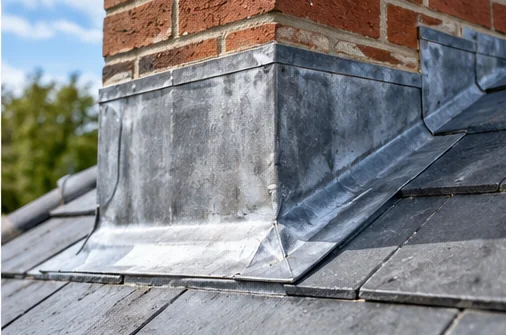
We can discuss repair options for leadwork and flashing at common roof junctions.
Weatherproofing around chimney stacks, including junctions where the chimney meets the roof covering.
Flashing where a sloping or flat roof meets an adjoining wall or structure.
Reviewing vulnerable roof intersections and the details that direct rainwater towards drainage points.
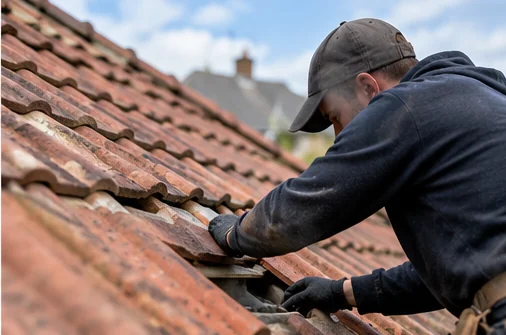
Assessing split, displaced or deteriorated flashing and discussing suitable repairs or replacement.
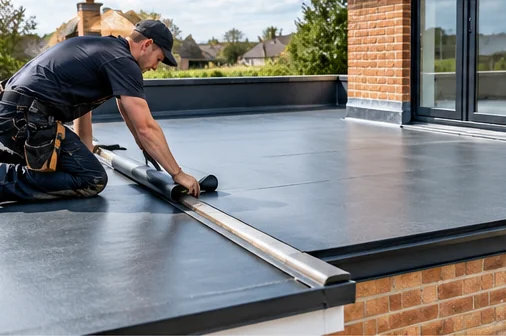
Weatherproofing details around flat roof edges, adjoining walls and penetrations.
Where existing materials are beyond repair, replacement may be the more appropriate long-term option.
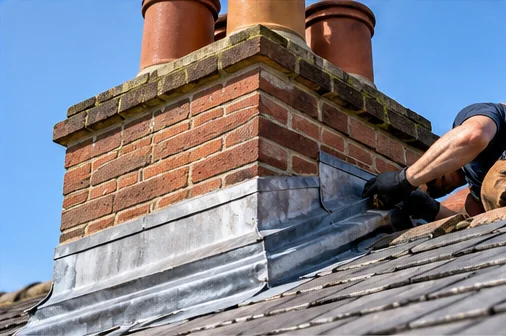
Water stains near a chimney or adjoining wall may be caused by damaged flashing, but the source is not always obvious. The surrounding roof coverings, mortar and junction details should also be considered.
Describe any leaks, loose flashing or visible damage and provide your property details.
Discuss whether inspection is required to establish the condition and cause.
Request a quotation and confirm the repair or replacement approach.
These answers are general guidance; every roof needs its own assessment.
Flashing helps prevent rainwater entering at joints, edges and changes in roof construction, such as around chimneys and walls.
Some localised defects may be repairable, while badly worn or incorrectly fitted flashing may need replacing. The condition should be assessed first.
No. Water can also enter through mortar joints, tiles, slates or other adjacent details. An inspection can help establish the likely source.
Do not climb onto the roof. If safe, take photographs from ground level and contact a qualified roofing professional.
Photographs are illustrative and do not represent completed Coastal Roofing Contractors projects.
Contact us to discuss the problem and request a quotation.
 Roof Repairs ↗
 Flat Roofing ↗